
Table of Contents
- Why Root Canal Treatment Becomes Necessary
- Signs You Might Need Root Canal Treatment
- What Root Canal Treatment Actually Does
- What The Appointment Feels Like
- Why A Crown Is Often Recommended After Root Canal Treatment
- Root Canal Treatment Vs Extraction
- Professional Insights On The Benefits Of Root Canal Treatment
- How To Protect A Tooth After Root Canal Treatment
- A Clear Wrap-Up In Plain Language
Tooth pain has a special way of making everything feel urgent. You might start chewing on one side, avoiding cold drinks, or waking up at night with a throbbing sensation that seems to pulse through your jaw. When pain reaches that level, it is easy to assume the tooth must come out. In many cases, it does not. Root canal treatment exists for one main reason, to save a tooth that is infected or deeply inflamed inside. The phrase “root canal” has a reputation, mostly because people connect it with pain. The truth is, the pain usually comes from the infection, not the treatment. Modern root canal treatment is designed to relieve discomfort, remove infection, and help you keep your natural tooth so you can chew normally again.
Why Root Canal Treatment Becomes Necessary
Inside every tooth is soft tissue called the pulp. It contains nerves and blood supply. When the pulp becomes infected or inflamed, it can cause strong pain and swelling. This can happen for several reasons:
- A deep cavity that reached the inner tooth
- A crack that let bacteria inside
- Repeated dental work on the same tooth
- Trauma to the tooth, even if the tooth does not look broken
- A leaking filling that allowed bacteria to spread
When infection is present, it typically will not resolve on its own. Root canal treatment is a way to clean out the infected tissue, disinfect the inside of the tooth, and seal it so bacteria cannot keep spreading.
Signs You Might Need Root Canal Treatment
Some symptoms strongly suggest that a tooth may need root canal treatment, including:
- Persistent toothache that lingers or throbs
- Pain that worsens when chewing or biting
- Sensitivity to hot or cold that lasts after the trigger is gone
- Swelling in the gums or face
- A bump on the gum near the tooth
- Darkening of a tooth compared to the others
- A tooth that suddenly feels loose or tender
Sometimes there are no major symptoms, especially if the nerve has already become damaged. That is why imaging and exams matter. Root canal treatment is based on diagnosis, not guesswork.
What Root Canal Treatment Actually Does
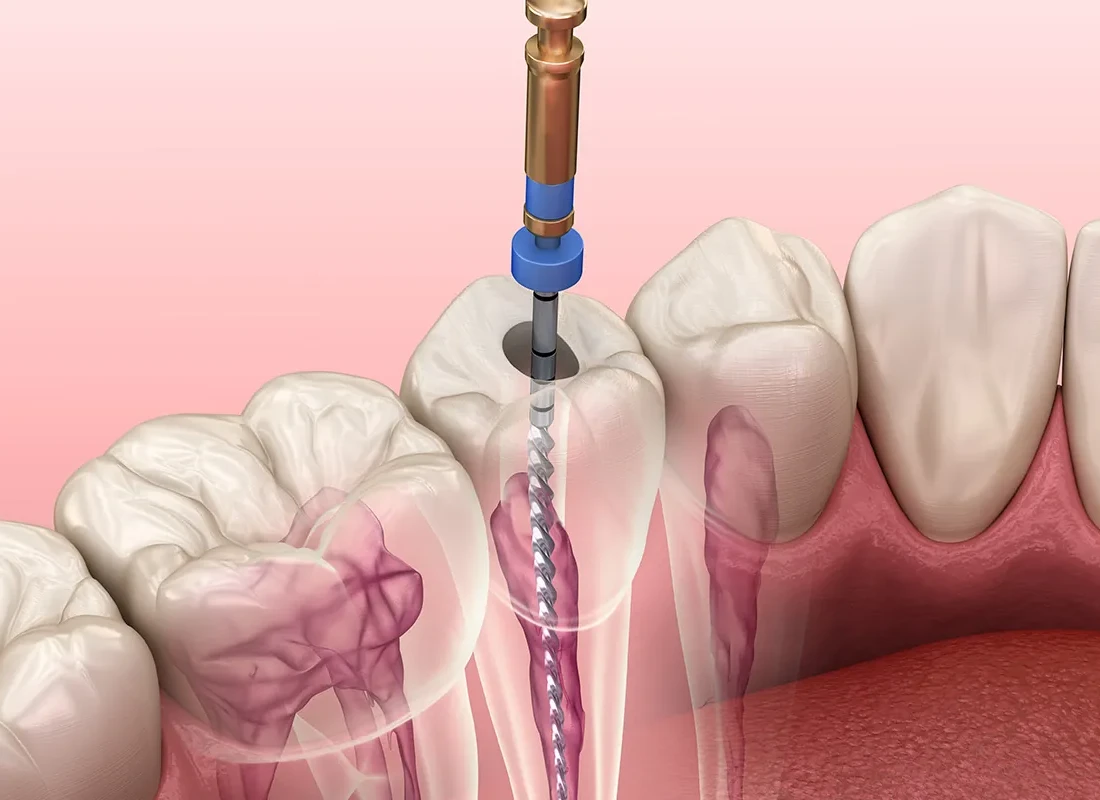
A root canal does not mean removing the tooth. Root canal treatment is a process that removes infection from inside the tooth while keeping the outer structure. Think of it like clearing out a damaged interior and reinforcing the tooth so it can still function. During root canal treatment, the provider typically:
- Numbs the tooth and surrounding area
- Creates a small opening to access the inside
- Removes the infected or inflamed pulp
- Cleans and disinfects the root spaces
- Fills the space with a sealing material
- Places a temporary or permanent filling
In many cases, the tooth then needs a crown to protect it long-term. That is because a tooth that has had root canal treatment can become more brittle over time.
What The Appointment Feels Like
This is the part most people worry about. Most patients report that root canal treatment feels similar to getting a filling, especially when the tooth is properly numbed. The procedure is designed to relieve pain, not create it. Afterward, you may feel mild soreness as the area heals. That can often be managed with over-the-counter medication and avoiding heavy chewing on that side for a short time. If you came in with severe pain, you may actually feel better quickly because the inflamed tissue has been removed. For many people, the biggest surprise is how much relief root canal treatment provides.
Why A Crown Is Often Recommended After Root Canal Treatment
A crown is not always required, but it is often recommended for back teeth and teeth that handle heavy chewing. After root canal treatment, the tooth may have less internal moisture and can be more prone to cracking. A crown helps by:
- Covering the tooth and reducing fracture risk
- Restoring chewing strength
- Protecting the tooth from future decay at weak points
- Helping the tooth last longer
If you skip the crown when it is recommended, the tooth may be at higher risk of breaking later, which can turn a saveable tooth into an extraction situation. The goal is to protect the investment made with root canal treatment.
Root Canal Treatment Vs Extraction
Some people ask, “Why not just pull it?” Extraction can be the right option in some cases, but keeping your natural tooth has advantages. A natural tooth maintains bone and bite balance and usually feels more natural for chewing. Extraction can also lead to additional steps if you want a replacement, such as:
- Dental implants
- A bridge
- A partial denture
In many cases, root canal treatment is a way to keep what you have, reduce pain, and avoid the chain reaction that can happen when a tooth is removed.
Professional Insights On The Benefits Of Root Canal Treatment
In professional dental care, preserving natural teeth is often a priority when it is safe and realistic. Root canal treatment is valued because it can control infection while keeping the tooth functional. Here are key benefits of root canal treatment recognized in clinical practice:
- Relieves pain by removing the inflamed tissue, the treatment addresses the source of the problem
- Stops infection from spreading, sealing the tooth helps reduce the risk of worsening infection
- Helps you keep your natural tooth, preserving the tooth supports chewing and bite stability
- Maintains a more natural feel, many patients prefer chewing on their own tooth rather than a replacement
- Can prevent bigger costs later, saving a tooth can reduce the need for more complex replacement procedures
The focus is always on diagnosis and long-term stability. When a tooth can be saved safely, root canal treatment is often the most direct path to relief.
How To Protect A Tooth After Root Canal Treatment
Once the root canal is done, your job is to protect the tooth while it heals and afterward. Helpful tips include:
- Avoid chewing hard foods on that side until the tooth is fully restored
- Keep brushing and flossing, gum health still matters
- Get the crown or permanent restoration on schedule
- Attend follow-ups if recommended
- Wear a nightguard if you grind, grinding can damage any tooth, including a treated one
The tooth can last many years when restored properly. The combination of root canal treatment and a protective restoration can turn a painful tooth into a stable one.
A Clear Wrap-Up In Plain Language
If you have persistent tooth pain, swelling, or sensitivity that will not settle down, root canal treatment may be the step that saves your tooth and stops the discomfort. The treatment is designed to remove infection and bring you relief. For many patients, it is not nearly as scary as they expected, and the benefit is real, keeping your tooth and getting your life back to normal. If you think you may need root canal treatment, contact Next Smile + Implant Center in Thousand Oaks, CA at (805) 261-5845 to book an appointment and get a clear diagnosis and plan for relief.