
Table of Contents
- Why Replacing Missing Teeth Is Important
- Understanding Dental Implants
- Benefits of Dental Implants
- Potential Considerations for Dental Implants
- Understanding Dental Bridges
- Benefits of Dental Bridges
- Limitations of Dental Bridges
- Understanding Dentures
- Benefits of Dentures
- Challenges Associated With Traditional Dentures
- Comparing Everyday Function
- Long-Term Oral Health
- Which Option Lasts the Longest?
- Choosing the Right Treatment
- Benefits Supported by Modern Dentistry
- Your Next Step Toward a Complete Smile
Have you recently lost a tooth or learned that one needs to be extracted? If so, you’re probably asking one of the most common questions patients have after tooth loss: “What’s the best way to replace it?” While there isn’t a one-size-fits-all answer, understanding the advantages and limitations of today’s most common tooth replacement options can help you make a confident, informed decision. Modern dentistry offers several excellent ways to restore missing teeth, with dental implants, bridges, and dentures remaining the three primary solutions. Each treatment has unique benefits, and the right choice depends on factors such as your oral health, lifestyle, long-term goals, budget, and the number of teeth being replaced. Choosing the right solution isn’t just about restoring your smile. Missing teeth can affect how you eat, speak, and maintain your oral health. Over time, untreated tooth loss may contribute to shifting teeth, jawbone deterioration, bite problems, and changes in facial appearance. That’s why replacing missing teeth sooner rather than later is often recommended. If you’re exploring tooth replacement options in Thousand Oaks, understanding how implants, bridges, and dentures compare can help you determine which treatment best fits your needs.
Why Replacing Missing Teeth Is Important
Many people assume that losing a single tooth isn’t a major problem, especially if it’s located toward the back of the mouth. However, every tooth plays an important role in maintaining balance within your bite. When a tooth is missing, neighboring teeth often begin drifting into the empty space. This movement can gradually change the way your teeth fit together, leading to uneven wear and increased stress on surrounding teeth. Another concern is bone loss. Natural tooth roots stimulate the jawbone whenever you chew. Once a tooth is gone, that stimulation disappears, and the body begins breaking down unused bone tissue. This process can continue for years if the tooth isn’t replaced. Replacing missing teeth helps preserve oral function while reducing the likelihood of future complications.
Understanding Dental Implants
Dental implants are widely considered the gold standard for tooth replacement because they replace both the root and the visible portion of the missing tooth. A dental implant consists of three primary components:
- A titanium implant post placed into the jawbone
- An abutment that connects the implant to the restoration
- A custom-made dental crown, bridge, or full-arch prosthesis
Once the implant integrates with the surrounding bone, it creates a stable foundation that closely mimics the function of a natural tooth. Unlike removable appliances, dental implants remain securely in place and can often last for decades with proper care.
Benefits of Dental Implants
Patients often choose dental implants because they offer several long-term advantages. These include:
- Natural appearance
- Strong chewing ability
- Excellent stability
- Preservation of jawbone
- No reliance on neighboring teeth
- Long-term durability
- Comfortable everyday function
- Improved speech
- Greater confidence
Because implants function similarly to natural teeth, many patients eventually forget they even have them.
Potential Considerations for Dental Implants
Although implants offer many advantages, they are not the ideal solution for every situation. Treatment requires sufficient jawbone support, healthy gums, and adequate healing time. Some patients may require:
- Bone grafting
- Tooth extractions
- Gum disease treatment
- Additional surgical procedures
The initial investment is also generally higher than other replacement options, although many patients find the long-term value worthwhile.
Understanding Dental Bridges
A dental bridge replaces one or more missing teeth by anchoring an artificial tooth between neighboring teeth. Traditional bridges typically rely on crowns placed over the teeth adjacent to the missing space. The replacement tooth is suspended between these supporting crowns. Bridges have been used successfully for decades and remain an effective solution for many patients.
Benefits of Dental Bridges
Dental bridges provide several important advantages. They can:
- Restore chewing ability
- Improve smile appearance
- Prevent neighboring teeth from shifting
- Restore speech
- Require no surgical placement
- Often be completed relatively quickly
For patients who are not candidates for implants, bridges may provide an excellent restorative option.
Limitations of Dental Bridges
One important consideration is that traditional bridges usually require reshaping healthy neighboring teeth to support the crowns. While this is an accepted treatment approach, preserving healthy tooth structure is often preferable whenever possible. Additionally, bridges replace only the visible portion of the tooth. Because no root replacement occurs, bone loss beneath the missing tooth may continue over time.
Understanding Dentures
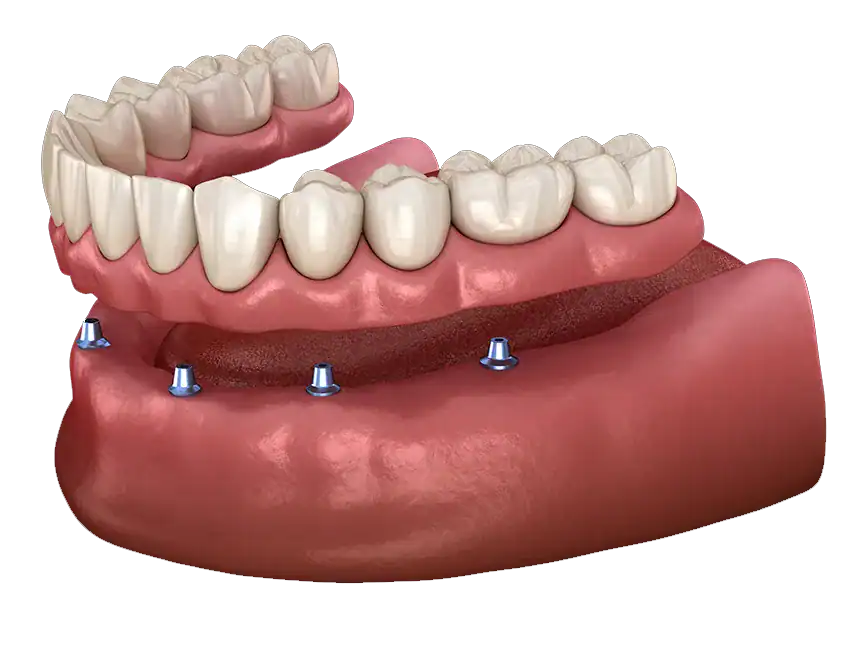
Dentures remain one of the oldest and most common methods of replacing missing teeth. Modern dentures have improved significantly compared to earlier generations and continue helping millions of patients restore their smiles. Dentures may replace:
- A few missing teeth
- An entire upper arch
- An entire lower arch
- Both arches
Depending on the design, dentures may be removable or supported by dental implants.
Benefits of Dentures
Dentures continue to offer several practical advantages. These include:
- Lower initial cost
- Replacement of multiple missing teeth
- Non-surgical treatment
- Relatively short fabrication time
- Improved facial support
Many patients appreciate dentures because they restore appearance while improving chewing compared to having no teeth at all.
Challenges Associated With Traditional Dentures
Despite their benefits, removable dentures may present certain challenges. Some patients experience:
- Slipping while eating
- Movement during conversation
- Reduced chewing strength
- Dependence on adhesives
- Ongoing adjustments
- Continued jawbone shrinkage
These concerns have led many patients to explore implant-supported alternatives.
Comparing Everyday Function
One of the biggest differences between implants, bridges, and dentures becomes apparent during everyday activities.
Eating
Dental implants generally provide the strongest chewing ability because they are anchored directly into the jawbone. Bridges also restore chewing effectively when properly supported. Traditional dentures may require dietary adjustments, particularly with hard or sticky foods.
Speaking
Stable teeth contribute to clearer speech. Because implants and bridges remain fixed, patients often adapt quickly. Some denture wearers require time to become comfortable speaking with their appliances.
Comfort
Dental implants often provide the most natural feeling because they function like individual teeth. Bridges are also fixed and comfortable. Removable dentures may require an adjustment period before feeling natural.
Long-Term Oral Health
One of the biggest distinctions among these options involves their impact on long-term oral health. Dental implants stimulate the jawbone and help reduce bone loss. Bridges restore appearance and function but do not prevent bone resorption beneath the missing tooth. Traditional dentures also do not replace tooth roots, allowing gradual bone loss to continue. For many patients, this difference plays a significant role in treatment selection.
Which Option Lasts the Longest?
Longevity depends on many factors, including oral hygiene, overall health, and routine dental care. With proper maintenance:
- Dental implants may last decades.
- Bridges often provide many years of successful function.
- Dentures typically require periodic adjustments, relines, or replacement as the jaw changes over time.
Regular dental visits remain important regardless of which option is chosen.
Choosing the Right Treatment
The best tooth replacement solution depends on several factors. Your dentist will evaluate:
- Number of missing teeth
- Bone quality
- Gum health
- Overall health
- Bite alignment
- Lifestyle
- Personal preferences
- Long-term goals
Some patients prioritize preserving bone. Others prefer avoiding surgery. Some seek the most stable long-term solution, while others focus on restoring function quickly. There is no universally correct answer—only the treatment that best fits your individual circumstances.
Benefits Supported by Modern Dentistry
Leading dental organizations continue to emphasize the importance of replacing missing teeth to maintain oral function, preserve oral health, and improve quality of life. Research consistently supports the effectiveness of dental implants, bridges, and dentures when carefully planned and maintained. The key is selecting the treatment that best addresses your unique clinical needs and long-term goals.
Your Next Step Toward a Complete Smile
Losing a tooth doesn’t mean you have to settle for discomfort or uncertainty. Today’s restorative dentistry offers more options than ever before, allowing patients to choose solutions that fit their health, lifestyle, and expectations. If you’re considering dental implants, bridges, or dentures, the experienced team at Next Smile Center in Thousand Oaks, CA can help you understand your options and develop a personalized treatment plan. Schedule a consultation to learn which tooth replacement solution is best suited to restoring your smile, improving your comfort, and protecting your oral health for years to come.